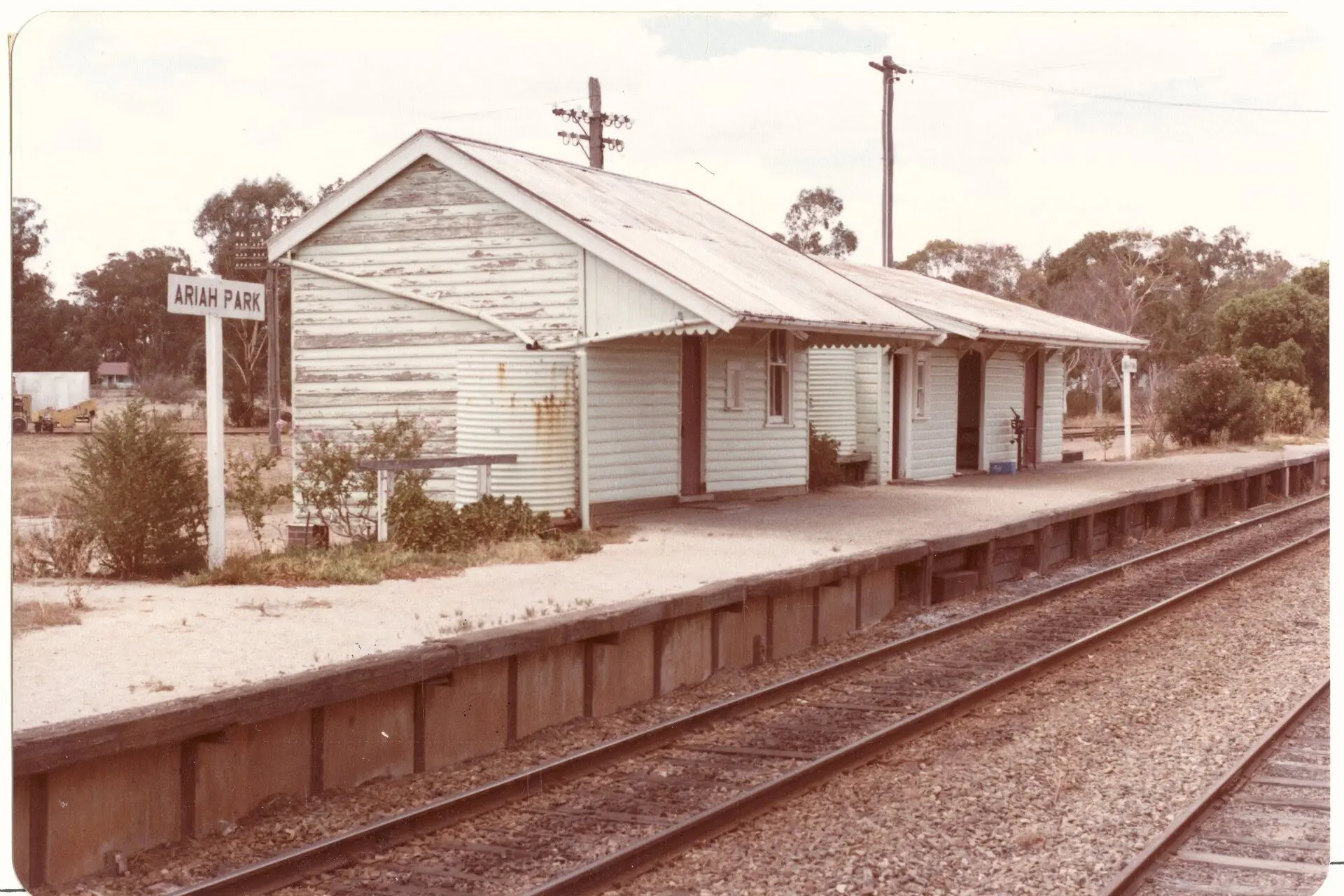
Exactly 120 years ago on Monday 5 November 1906, the first stage of the Temora–Barellan railway was handed to the Commissioners: 32.8 km from Temora out to a brand-new temporary terminus at Ariah Park. Temora itself had only had the rail since 1893. Beyond it, the southwest wheat country still depended on cartage. In May 1905 A. G. Humby wrote in the Sydney Morning Herald of South Australian farmers inspecting the Temora–Broken Dam–Bolero–Barellan country, drawn by the promise of the new line. Without it, he said, growers were paying "two shillings to half a crown a bag" to haul wheat "forty or fifty miles" — enough to make a crop barely worth sowing. The railway was the difference between clearing and planting, and walking away. By the winter of 1906 the rails were already earning their keep. Local papers record wheat loading from the new Ariah Park siding in July, while the station was still going up: a platform said to run about 500 feet, built with wool dumping in mind, and Coolamon Street already sprouting a hotel, auctioneer, blacksmith and post office before the village was even surveyed. On the morning of the 5th the Herald carried a short Temora wire: the line to Ariah Park would be handed over that Monday, and “trains will convoy the public after that date.” Three stations opened with the section. Between Temora and the terminus came Linton (later Pucawan) and Beaconsfield (renamed Quandary the following May). Ariah Park sat about 522 km from Sydney — a little under 33 km past Temora — and stayed the end of the steel until the next length to Barellan opened in November 1908. The larger dream, the Temora–Roto line, would take decades more; Roto itself was not reached until 1931. The railway effectively created Ariah Park: the village was gazetted in November 1907, the National Trust later listed the Coolamon Street streetscape of peppercorns and verandahs, and on 27 September, 1916, the town sent Australia’s first experimental bulk wheat consignment — the moment remembered by the memorial truck still parked beside the line.