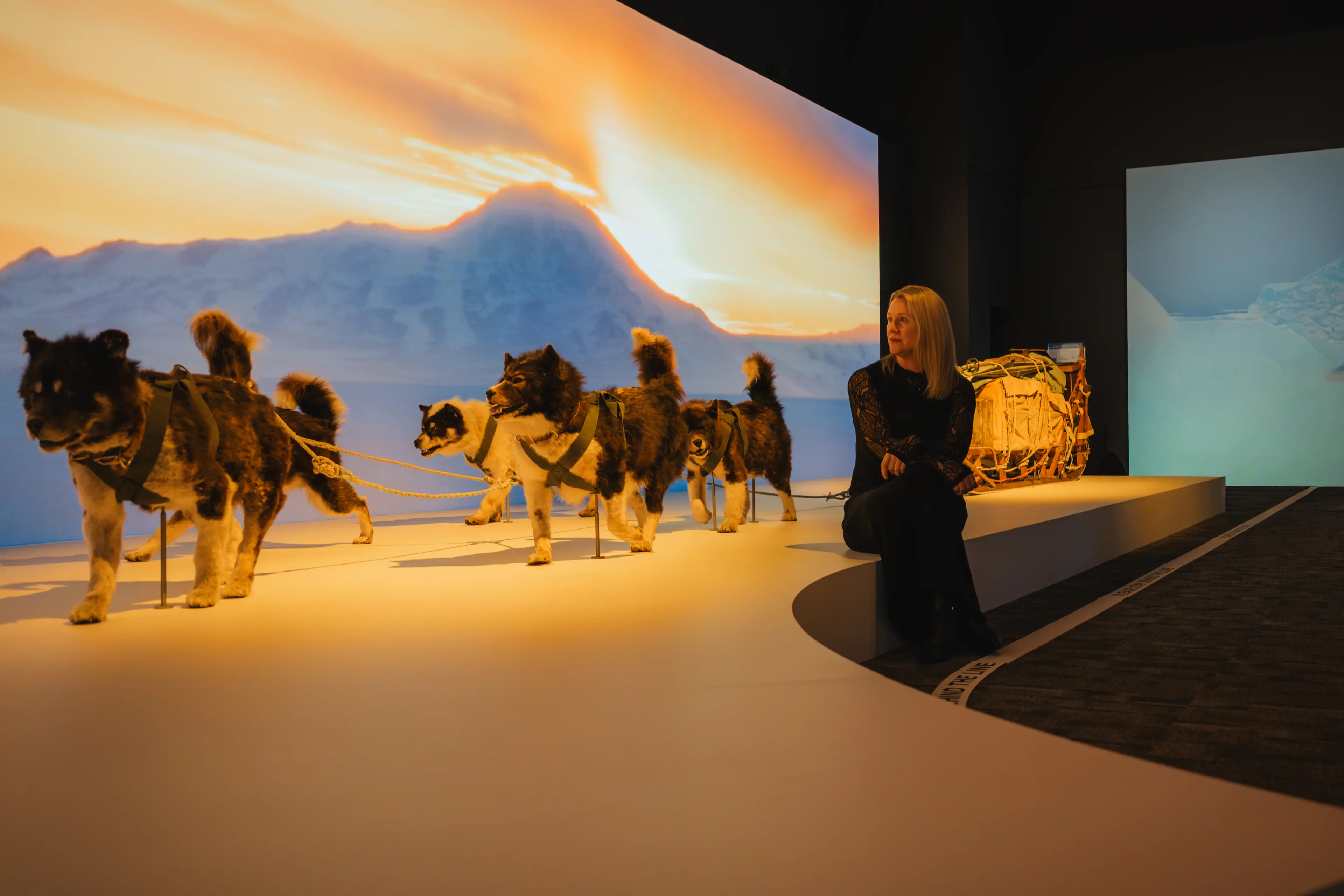
The chilly mornings in Temora of late pale in comparison to those of the Antarctic, but the beauty in the starkness of the environment has attracted explorers and visitors since the late 1890s. The history of Australia’s involvement in the Australian Antarctic Territory can be traced back to expeditions very early in the 1900s and that history is now on display at the National Museum of Australia in Canberra titled Antarctica. Drawn from the newly acquired National Antarctic Heritage Collection, generously donated by the Australian Antarctic Division (AAD), Antarctica tells stories of Australians who, for more than a century, have ventured into one of the most extreme environments on Earth. The museum says that there is the opportunity to explore tales of desperation, triumph, tragedy and wonder as the exhibition celebrates Australia’s enduring connection to the frozen continent. Come face-to-face with the people who have progressed Australia’s mission in Antarctica for over a century. People from all walks of life have been a part of the Australian Antarctic story from scientists to station leaders and tradies to artists, the exhibition celebrates the commitment, resilience and strength that has contributed to our understanding and safeguarding of the continent. The museum says that the exhibition features more than 200 intriguing objects, Antarctica transports visitors to a frozen world, showcases the early “Heroic Era” of exploration and introduces the scientists and researchers who have dedicated their working lives to understanding the continent. As a result of the AAD’s donation, the museum is now the custodian of one of the world’s premier Antarctic collections. Most of the objects in Antarctica are on display for the first time. There are letters written by some of Australia’s early expeditioners fearful of never returning home and examine modern clothing designed for men in sub-zero conditions but worn by women like Diana Patterson, who smashed the ice ceiling as one of the first female Antarctic station leaders. Sled dogs that once lived and worked on the icy continent have been preserved and visitors will be moved by how their loyalty and friendship comforted isolated expeditioners the museum says. There is even scientific equipment and large oversnow vehicles used by Australian researchers over decades. National Museum of Australia Director, Katherine McMahon, said Australians have long been fascinated by Antarctica. “Antarctica has long inspired our collective imagination, it is an integral part of our heritage and culture, and embedded in the Australian narrative”, Ms McMahon said. “This exhibition tells a grand saga – from Deep Time, when we shared the Gondwana supercontinent, to the first explorers who ignited the national imagination, to the many Australians leading world-class research there today. “Those who experience Antarctica’s beauty and power often return transformed,” Ms McMahon said. Museum senior curator Dr Laura Cook said for most people, travel to the most remote continent on Earth remains a rare and precious experience beyond reach. “We hope the Antarctica exhibition will transport visitors to this vast, beautiful place where they can discover Australia’s enduring relationship with one of the most extreme environments on Earth,” Dr Cook said. “This exhibition features one of the Museum’s largest digital immersive experiences to date; with a 26-metre long, curved-wall projection featuring high-definition video and sound recorded in Antarctica over a decade.” “Viewers will experience the continent's environmental extremes – from a screaming blizzard to deep silence, from the aurora australis to the midnight sun hovering across the horizon.” The exhibition follows a long-standing collaboration between the National Museum and the AAD, which resulted in over 1,000 objects being transferred to the Museum for safekeeping as part of the National Antarctic Heritage Collection. Co-curator Dr Jono Lineen thanked the AAD for its passion and commitment. “At the heart of this exhibition lies the intriguing and historically rich National Antarctic Heritage Collection donated by the AAD,” Dr Lineen said. “We are extremely grateful for the trust AAD has placed in the Museum to provide a home for this collection, to make it accessible to all Australians and to share this important story with the nation.” AAD Chief Scientist, Professor Nerilie Abram, said the exhibition brings together Australia’s Antarctic legacy of science and exploration, with the stories of those who have sacrificed time with their loved ones and faced the harshest conditions on the planet. “What makes this exhibition so powerful is the way it brings together objects and personal accounts to illuminate the human effort behind Antarctic science,” Professor Abram said. “These artefacts and stories provide a tangible connection to the people and processes that underpin Australia’s scientific work on the continent, helping visitors better understand how that work is conducted and why it matters.” Tickets are free but bookings are essential. The exhibition runs from 1 July until 11 October.