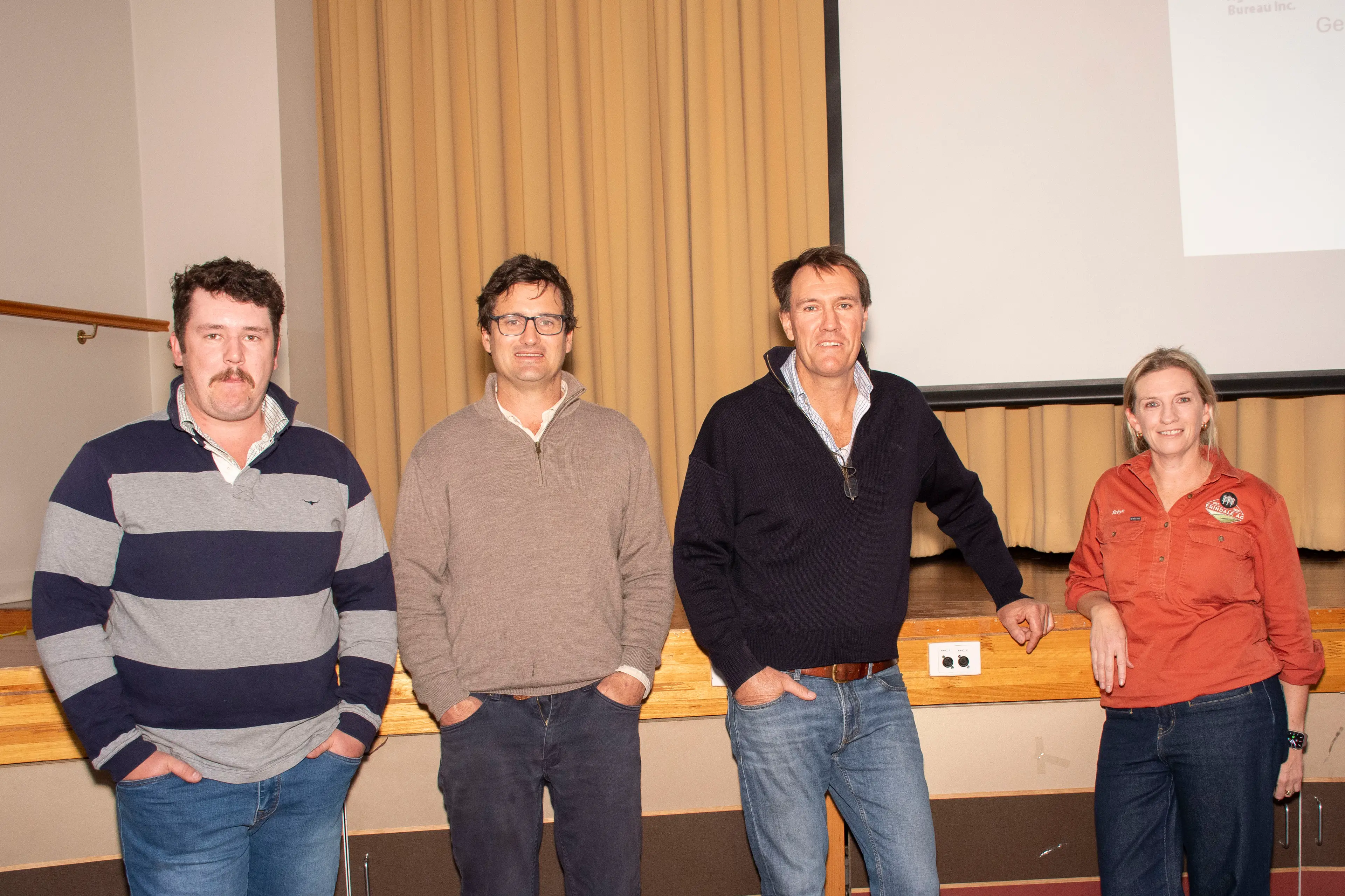
Ratepayers across Temora Shire are being urged to have their voices heard and make a submission to Council on its proposed rate rise before a deadline of 9am tomorrow. The council proposal to increase rates permanently between 79.4 per cent and 124.25 per cent through a Special Rate Variation (SRV) over the next three years has led to widespread community concern and discussion, with around 100 farmers attending a meeting held at Temora Ex Services Memorial Club on Monday night. The meeting, co-ordinated by the Temora branch of NSW Farmers, Temora Agricultural Bureau and Mirrool Creek Growers Group, passed a motion calling for a pause on all SRVs. The motion was an endorsement of the NSW Farmers recommendation at a state level that there should be a pause on all SRV applications, and that in cases where councils make SRV applications, this should trigger an independent, multi-year financial review against a specified set of criteria to validate both necessity and community impact. The motion followed a presentation by council representatives in attendance at the meeting. Chaired by district farmer Darryl Harper, the meeting was addressed by Temora Agricultural Bureau and Mirrool Creek Growers Group representative, Robyn Buerckner. Ms Buerckner noted that all were present for a common purpose - “to keep calm and farm on”. Questions from local farmers which had been provided for council staff to consider before the meeting were answered by Temora Shire Council general manager Melissa Boxall and director of finance and governance Elizabeth Smith. These ranged across areas from the validity of council’s capacity to pay report prepared by independent consultants, Morrison Low, to which services might be cut under the different rate scenarios. In response to a question which raised concerns that consideration of the SRV had been rushed, Ms Boxall noted that council had been discussing the SRV since 2022 and had actively been working towards it since 2023/2024. Ms Boxall said the decision whether to proceed with the application for the SRV would lie with the elected councillors. Once the consultation process is complete, council staff will review the feedback in the submissions and collate the information for councillors. She noted that while the number of submissions would be considered, council also needed to take into account the broader community interest of the SRV proposal. Results of the consultation process will be presented to councillors at their September meeting, with a final decision to be made on the SRV application at council’s November meeting. If approved by Council, the SRV application will then be made to the Independent Pricing and Regulatory Tribunal of New South Wales (IPART) by February of next year. A consultation process will then be undertaken by IPART before it decides whether to approve the SRV. “Council is committed to a transparent, structured and community informed process,” Ms Boxall stressed. After the council presentation, chair Darryl Harper noted that council had asked not to take any specific questions from the floor of the meeting, but said they were open to any general questions with the understanding that they might not be able to answer all questions. Looking at comparisons with other neighbouring councils, Ms Buerckner noted that both Hilltops and Coolamon Shire Councils currently had lower rates per hectare than Temora Shire. Farm valuations had skyrocketed in recent years adding further complexity to the rates process, with Ms Buerckner adding that “at the end of the day, our profit margins don’t reflect increased land valuations”. Ms Boxall responded that it was difficult to compare councils due to differences in each individual situation. With Hilltops being an amalgamated council, Ms Boxall said it was much larger and could find additional savings due to its scale. In contrast, she said Coolamon was a much smaller Council and benefited from its proximity to Wagga. Ms Buerckner informed the meeting that both Hilltops and Leeton Councils had considered SRVs in recent years but had resolved not to proceed. She observed that the near 80 per cent increase which was preferred by council felt like a big jump, and asked if a lower increase had been considered. Ms Boxall responded that this was really a matter for the elected representatives on council, but added that council staff had provided data and information which supported the 80 per cent increase as the minimum to ensure council remained financially sustainable. It was noted that only 35 out of the 128 Councils across NSW had never applied for an SRV. At the conclusion of the meeting, council representatives were thanked for their attendance. Ms Buerckner encouraged farmers to voice their opinions through council’s online survey and by making a submission. “They will look at individual submissions and the amount of detail in those submissions,” she said. Both Mr Harper and Temora NSW Farmers branch vice president Rob Allen also stressed the importance of talking with your local councillors. Mr Allen said there was an opportunity for the SRV to be defeated at a Council level if enough councillors voted against it. “It’s the councillors who make these decisions,” Mr Harper added. NSW Farmers – Temora Branch