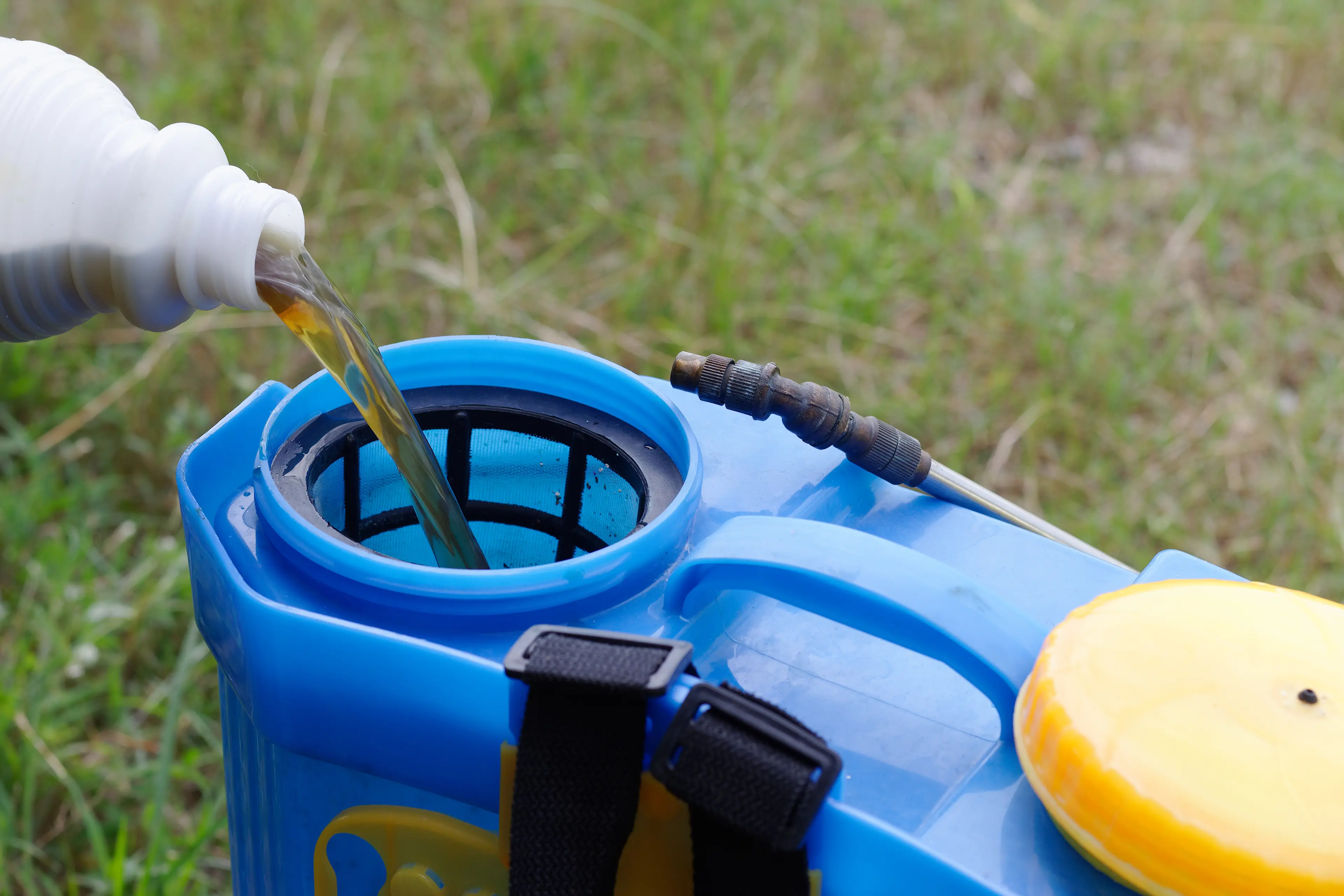
The recent ruling by the Australian Pesticides and Veterinary Medicines Authority's (APVMA) on the herbicides paraquat and diquat has created controversy with a mixed response between farmers and health advocates. Health advocates were calling for a complete ban of the chemicals that have been linked to Parkinson’s Disease and farmers are disappointed that new restrictions have been placed on the widely used herbicide. APVMA CEO Scott Hansen said the reviews applied contemporary risk management frameworks to rigorous scientific investigation of the impacts of paraquat and diquat on human health and the environment. “Both chemicals remain available for use with significant new restrictions on application rates and permitted uses,” Mr Hansen said. “To protect users from acute exposure, new restrictions will phase out backpack sprayers and require enclosed mixing and loading systems for all uses, and enhanced personal protection equipment. “Overall, the maximum rate of application on paraquat and diquat will be 231 grams per hectare, when it was previously 1150 grams per hectare.” According to the APVMA these restrictions are driven by acute toxicity risks for people handling the Schedule 7 poisons and a detailed assessment of data showing acute and chronic exposure risks to birds and mammals foraging in treated areas. During the review process the APVMA received 171 submissions from scientists, doctors, the agricultural industry and other interested parties. Submissions on paraquat and diquat included a range of concerns including human health impact, farming viability and environmental impact. According to Parkinson’s Australia the continued use of the agents is a failure on the part of the government watchdog for failing to ban the chemicals that have been linked to Parkinson’s Disease. The organisation says more than 70 countries have already banned the chemical including the European Union, the United Kingdom and China due to the toxicity of the chemical. Parkinson’s Australia CEO Olivia Nassaris says the incidence of Parkinson’s is projected to triple by 2050, posing pressure to the health system and economy. “This is going to be an absolute epidemic and we have to be doing something now if we are to stop it,” Ms Nassaris says. “While we welcome the controls, including increasing PPE requirements and getting rid of backpack sprayers in favour of enclosed cabs, they simply don’t go far enough. “The APVMA has failed not only farmers who use paraquat but all the other Australians exposed to it. “In the 30 years they’ve been reviewing this chemical, 70 countries around the world have banned it – yet we've still got Aussie farmers using it every day. We’re the last to act here – and we’ve failed.” On the other side of the argument peak farmer groups NSW Farmers, the National Farmers Federation and Graingrowers have expressed reservations at the decision to introduce, what they describe as, onerous restrictions on the chemical. NSW Farmers President Xavier Martin said farmers respect the role of the APVMA as Australia’s independent, science-based regulator, but the decision raises serious and practical concerns for agricultural productivity, stewardship of the landscape and biosecurity. “Farmers respect science - but we also need decisions that work in the paddock. Right now, there's a real risk we're being left without a tool we rely on, and without an equal replacement,” Mr Martin said. “It is encouraging to see that some of the practical issues raised by farmers have been taken into account in the final decision, particularly the recognition of optical spraying systems and the higher rates for those targeted technologies. “This shows that when farmers engage constructively and put forward evidence, regulators are prepared to listen - but the reality is that the final decision still falls short of what’s needed on farm,” Mr Martin said. The National Farmers’ Federation (NFF) President Hamish McIntyre said farmers take their responsibility to protect people and the environment seriously. “Without healthy people and a healthy environment, there is no food and fibre production. That’s a fundamental reality for every farm business,” Mr McIntyre said. “We acknowledge the community concern around paraquat, and it is absolutely critical that the products farmers use are safe for both people and the environment. “Paraquat helps support effective weed management and enable practices like no-till farming, which protects soil health, reduces erosion and helps retain moisture. “These practices are critical as farmers respond to increasingly variable seasons and growing demand for food and fibre.” GrainGrowers chair Rhys Turton said today’s ruling includes revised assessments which will restrict some major application rates, but it is positive that science-based evidence has prevailed in important areas of this decision. “We thank all our growers who took part in surveys, trials on their farm and the grains industry experts who painstakingly compiled evidence,” Mr Turton said. “Industry must continue to work on alternative chemistries to ensure growers have all the tools available to them. “We now must look forward and work to ensure Australian growers can continue to do what they do best – produce world class food for customers here and abroad.” Neurologist David Blacker, who has Parkinson’s, says the data on paraquat is overwhelming. “Large scale studies have identified an association between paraquat and the incidence of Parkinson’s,” he says. “Like myself, people who grew up on farms and live around places like golf courses that are using paraquat aren’t safe.” Professor Blacker says banning paraquat is not just about reducing Parkinson’s, it’s about improving the quality of food for everyone – we missed an ideal opportunity to improve the health of everyone.