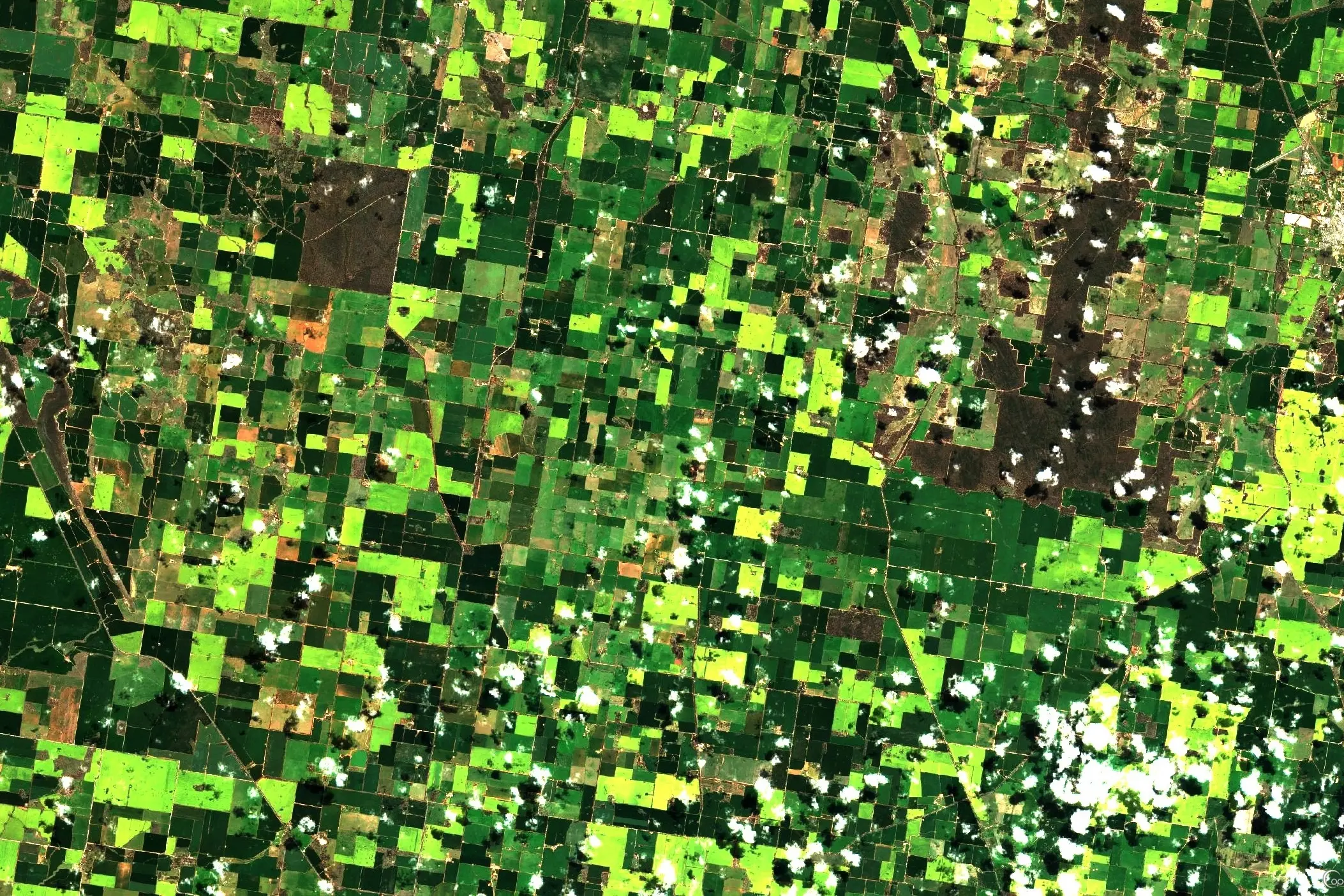
The paddocks around the Riverina and beyond are shining bright with a splash of yellow due to the spring canola crop, which is Australia’s largest seed crop. The local paddocks are so bright with the mass of yellow that they can be seen from space. A satellite image which Weatherzone shared on its website last week clearly showed the bright colour of canola crops against the spring greens across the fields of Temora and surrounds. The Australian Bureau of Statistics reports that up to seven million tonnes of canola are grown in Australia every year, which accounts for about one-quarter of the national wheat crop. Australian canola is a popular seller overseas, often used for cooking oil and margarine. NSW is the nation’s second-largest canola state, behind Western Australia. Australia’s three largest-producing canola states, most years, are Western Australia, NSW and Victoria, respectively. Mostly sown in autumn, the local canola crop has benefited from winter weather patterns which have bolstered canola growth. The Riverina recorded above-average winter rainfall to boost this year’s canola crop. As we enter spring, pollen tends to affect those susceptible to hay fever, however, although the paddocks are full of canola in many places around the region, hay fever sufferers have little to worry about from the yellow crop. Grasses usually cause hay fever when their pollen swirls in the wind, but because canola is insect-pollinated, the pollen tends to be stickier and heavier than grass pollen, which makes it more difficult to be picked up on windy days.