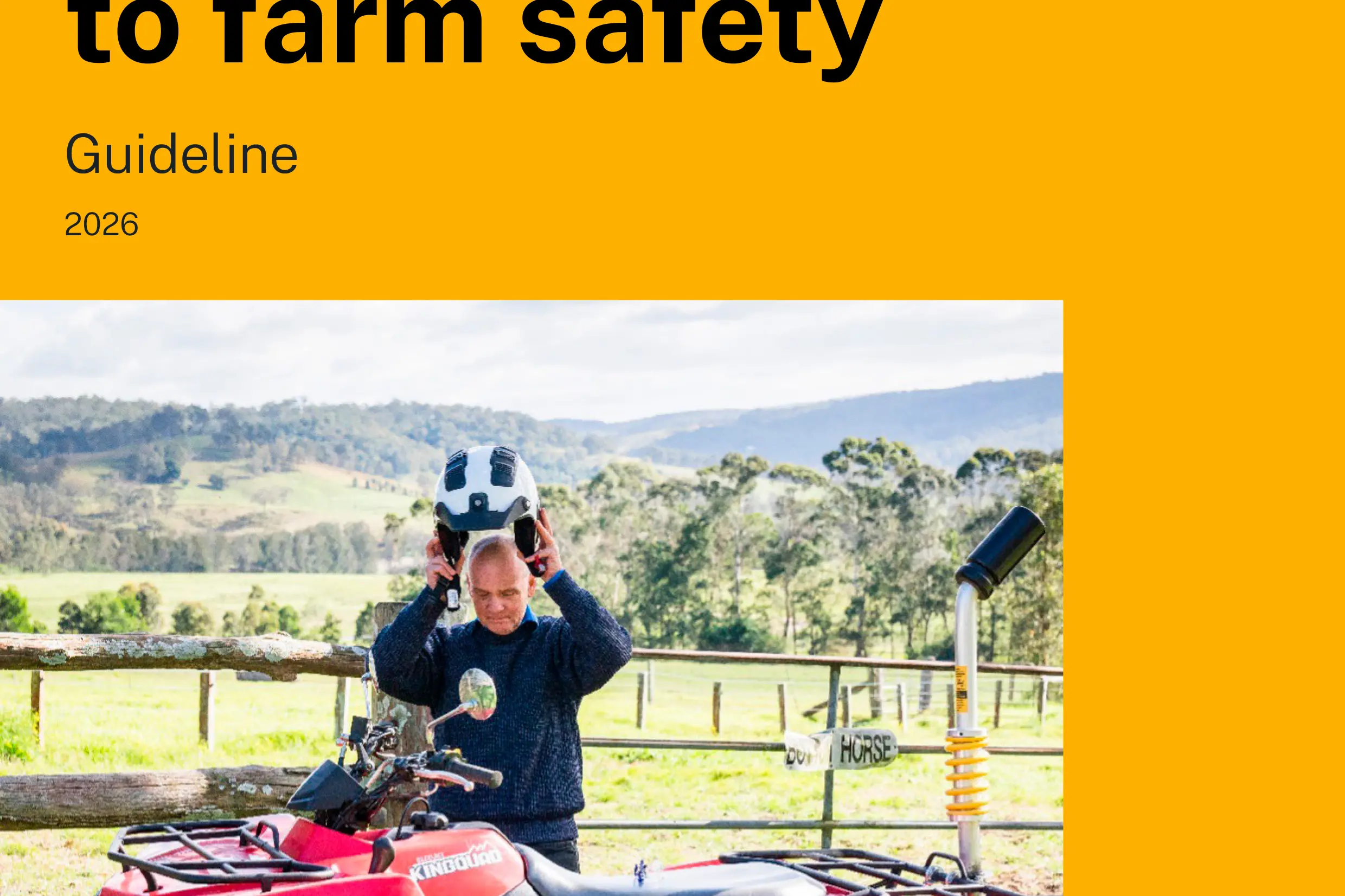
A new farm safety training program has been launched by the NSW state government to be run by SafeWork NSW, to improve work health and safety (WHS) outcomes among agriculture and farming workers. The 12-month program will be piloted to about 1,000 workers in the agriculture and farming sector and will provide training to lift baseline WHS knowledge and learn about safer behaviour on farms. Upon completion of the training, participants will receive a certificate of completion which can be shared with employers as evidence of their knowledge and understanding of farm safety. SafeWork NSW will use the outcomes from the pilot program to evaluate the feasibility of having an industry-specific safety card for workers in the agriculture sector. The program is one of several initiatives being discussed at the annual SafeWork NSW Farm Safety roundtable that was held in Wagga Wagga this week. Now in its third year, the event brings together leaders from across government and industry to focus on practical solutions for reducing fatalities and serious injuries in the sector. Minister For Agriculture Tara Moriarty said that farm safety is extremely important, there are many hazards unique to agricultural work and it is paramount that workers have the correct protections in place to ensure they are safe at work. “These annual roundtables are a great opportunity for agricultural industry members and workers to discuss hazard reduction and safety behaviour they have found to reduce workplace injury and death, and how these lessons can be applied across the industry,” she said. Agriculture remains one of Australia’s most dangerous industries, with consistently high rates of workplace fatalities and serious injuries. In 2025, SafeWork NSW responded to 11 workplace fatalities in the agricultural industry in NSW. Incidents involving farm vehicles, including quad bikes and side-by-side vehicles (SSVs), remained one of the leading causes of fatalities and serious injuries in agriculture across NSW last year. Farming accounts for one in every five worker deaths across NSW and in addition to farm vehicle accidents animal handling, biosecurity hazards, tree work, noise and electrical work, and even drowning have been identified as major dangers in the agricultural workplace. Common farm hazards that can cause minor and serious injuries include manual handling, slips, trips and falls or being struck by moving heavy moving objects or livestock. Minister for Industrial Relations and Work Health and Safety Sophie Cotsis said that there are more than 81,000 people employed across NSW’s agricultural industries, from farming and forestry to fishing, and far too many are still being seriously injured or killed simply by going to work. “The agriculture sector remains one of the most dangerous industries in the state, which is why the NSW government is investing in practical initiatives like the Farm Safety Training Program to improve work health and safety outcomes for workers, businesses and farming communities,” Ms Cotsis said. “Farmers have been telling us that they want an industry-specific safety card for workers in the agriculture sector and the Fram Safety Training Program will lead to delivering that.” “Too many workplace incidents on farms involve machinery, vehicles, mobile plant and animals - risks that can often be reduced through proper training, safer equipment, stronger safety procedures and better supervision. “Every worker, no matter where they work or what job they do, has the right to return home safely at the end of the day. “That includes the thousands of workers helping power NSW’s agricultural economy in regional and rural communities.” In addition to the program, SafeWork NSW will launch the new First Steps to Farm Safety Guide which is a practical, industry-informed resource designed to help farmers and agricultural businesses strengthen safety practices on the ground. The guide forms part of a broader package of practical and accessible safety resources, backed by ongoing awareness campaigns, targeted communications and proactive compliance programs engaging directly with farmers and agricultural businesses across NSW. Building on actions from the 2024 and 2025 agriculture roundtables, SafeWork NSW has also expanded the $1,000 NSW Small Business Safety Rebate Program to support more practical on-farm safety measures. New additions to the rebate program include agricultural drones as a safer alternative to high-risk farm vehicles, high-visibility power pole wraps and aerial line markers, helping reduce risks and improve safety outcomes across the sector. SafeWork Commissioner Janet Schorer said that by working collectively and listening to each other, we can make sure those working on farms and agricultural businesses better understand their duty under work health and safety laws to keep workers safe. “Everyone deserves to return home safely from work,” he said. NSW Farmers have praised the program with president Xavier Martin saying that NSW Farmers is committed to working collaboratively with SafeWork NSW to support education and awareness-raising initiatives that improve work health and safety outcomes across the agriculture sector. “We believe that practical, industry-led education is the most effective way to create lasting safety improvements on NSW farms,” Mr Martin said. “We look forward to ongoing consultation with SafeWork NSW to ensure these initiatives are practical for businesses of all sizes across the agriculture sector, recognising the unique operational realities faced by rural and regional farm businesses.” Country Women’s Association (CWA) president Tanya Jolly has highlighted the role women have to play in fostering a positive safety culture in agriculture. “Women are central to the safety culture of agriculture. Across rural NSW, women are often the people making sure safety conversations happen, risks are identified, and practical systems are in place to help keep families, workers and communities safe,” Ms Jolly said. “The CWA of NSW is pleased to support continued awareness around side-by-side vehicle safety. On farms, these vehicles are an everyday tool, but wearing a seatbelt is one simple step that can make a lifesaving difference.” Farmers can check their eligibility for the NSW Small Business Rebate and apply on the NSW Government website at https://www.nsw.gov.au/grants-and-funding/1000-safework-small-business-rebate. The WHS Training for the Farm Safety Training Program will commence later this year.