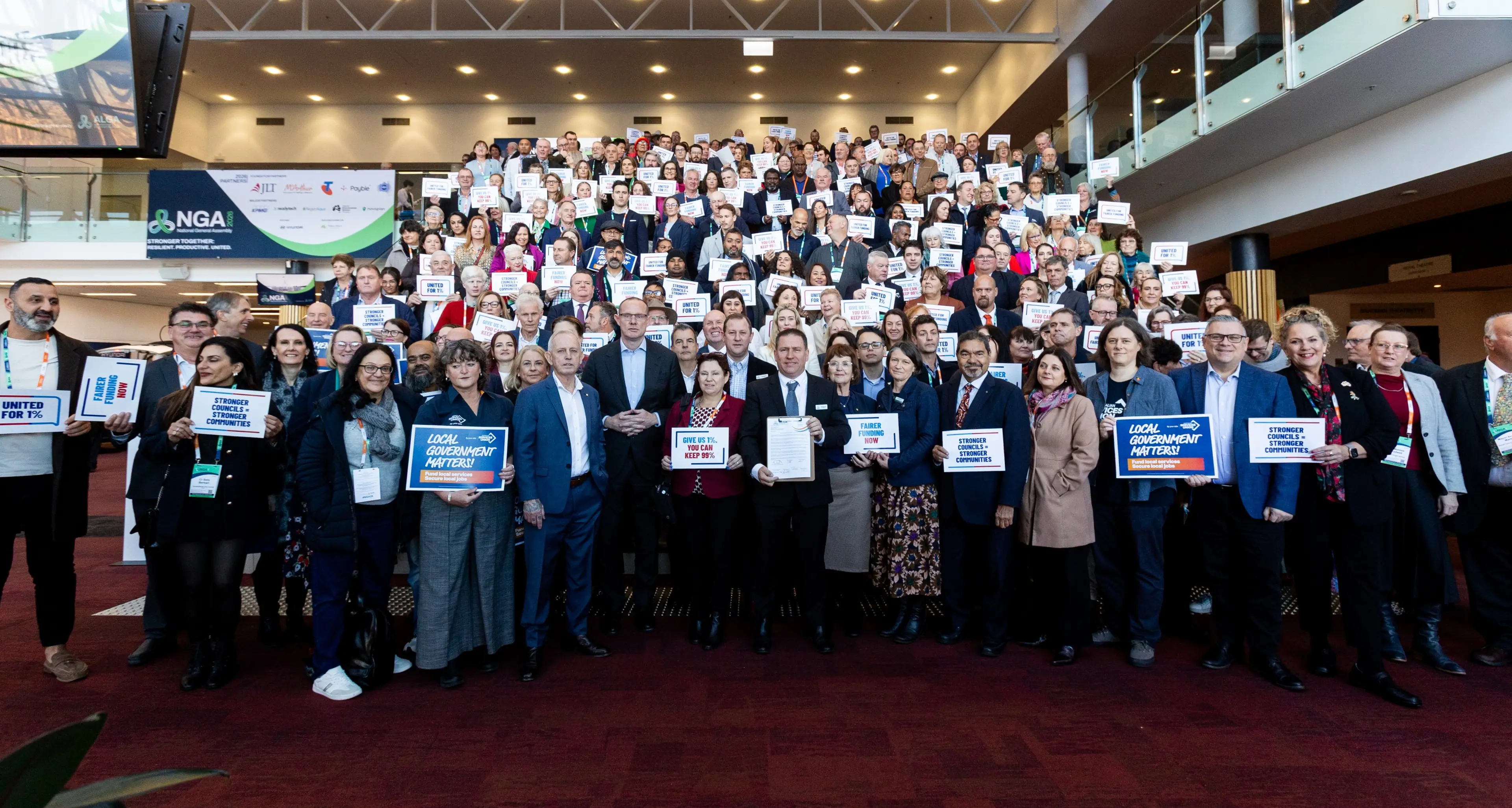
Councils from every state and territory have joined forces with unions representing the local government sector to warn Federal Parliament of a looming financial crisis. A letter, signed by associations representing more than 500 councils nationwide, was endorsed at the National General Assembly of Local Government. The national campaign calls for an immediate increase of $3.5 billion in Commonwealth Financial Assistance Grants (CFAG), restoring the program to one per cent of Commonwealth taxation revenue. In 30 years, the original allocation of one per cent has been whittled away to less than half and in the latest federal budget was reduced even further to .49 per cent. The letter will be sent to the Speaker of the Parliament as well as every MP and Senator in a move President of Local Government NSW Mayor Darcy Byrne said was unprecedented. "Today mayors from every corner of the continent are joining with unions representing the whole local government workforce to say this crisis in funding for councils must be addressed," Cr Byrne said. "In many regional communities in particular there is simply not enough funding for basic services to be maintained. That's why we have taken this unprecedented step to force the Parliament to act on this crisis." This joint call to increase CFAG comes as a growing number of regional councils in particular face severe financial pressures that threaten basic services. "Councils provide vital services and infrastructure that our national economy and productivity rely upon," the letter says. "The success of our Australian system of government depends upon our councils succeeding at grassroots level. "But this system is in jeopardy. "Long term planning and delivery requires long term financial security and certainty. "Councils have limited options to raise revenue and in many cases are highly reliant on untied financial assistance grants from the Commonwealth." The continuous cuts to the CFAG, since 1996, have had an impact on the bottom line of all rural and remote councils and Temora Shire Council is no exception with the council seeking community consultation on the possibility of the need for special rate variations (SRV) for the first time in the council’s history. Temora Shire Council mayor Rick Firman said that the cuts are having significant impact in dollars terms for the council with many cost saving measures already in place, including a reduction in councillor allowances. “The national campaign reinforces the financial challenges that councils like Temora Shire are already working hard to address," Cr Firman said. “Councils across Australia are all facing the same reality. The cost of delivering infrastructure and essential services continues to increase, while the level of funding available to local government has not kept pace. “Rural, regional and remote councils continue to face unique financial pressures, maintaining extensive road networks and critical community infrastructure across large geographic areas with relatively small ratepayer bases. "Our shire community expects safe roads, reliable waste services, well-maintained parks and sporting facilities, libraries, swimming pools and many other essential services that contribute to the quality of life we enjoy in Temora Shire. "These are services rural, regional and remote communities rely on every day, but they cannot continue to be delivered sustainably if funding continues to fall further behind rising costs." One of the biggest areas that Temora residents will have noticed the impacts is the roads where 20 per cent of the CFAG is specifically allocated. Roads are one of the council’s largest infrastructure costs. “Temora Shire Councillors and staff are doing everything within our control to improve our long-term financial sustainability,” Cr Firman said. “We are reviewing our operations, identifying efficiencies, carefully managing expenditure and having open conversations with our shire community about the challenges we face. "While we have a responsibility to make difficult decisions locally, we also have a responsibility to continue advocating for a fairer funding model from both the state and federal governments." United Services Union general secretary Graeme Kelly said that the decline in the grants has real consequences for the workers and communities who depend on council services. "That decline has real consequences for the workers and communities who depend on council services,” Mr Kelly said. "Restoring the one per cent benchmark is the single most important thing Canberra can do for local government.” In NSW there are more than 50,000 council workers and National Secretary of the Australian Services Union, Emeline Gaske, highlighted the impact the crisis will have on the workforce. “Council workers keep Australian communities running every single day,” Ms Gaske said. “They collect our bins, run our libraries, maintain our roads and support communities through floods and fires. "They do this work professionally and with commitment, but they need councils that are properly resourced to back them up.” The decline in the CFAG represents an ever-increasing form of cost shifting from sate and federal governments onto local councils with residents paying the price with increased rates and reduced services. "The message is consistent whether it comes from rural councils, metropolitan councils, local government associations or the workforce that delivers these essential services – councils need a fairer share of funding if we are to continue meeting the needs of our communities,” Cr Firman concluded. "Councils are doing everything they can to improve efficiency, plan responsibly and make difficult decisions locally, but lasting financial sustainability also requires governments to work with us.”