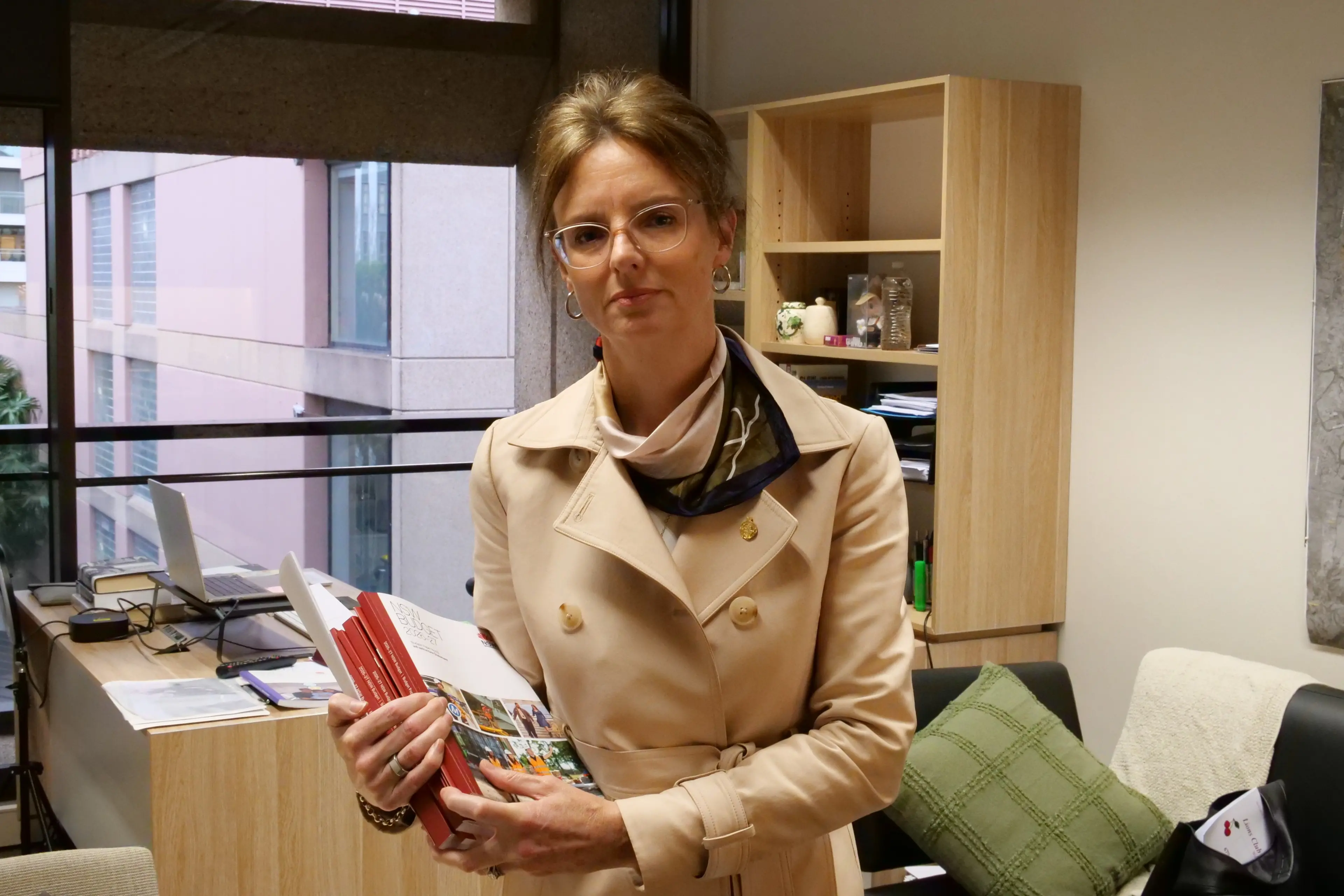
The NSW state budget was handed down last week and there has been an outcry from regional advocates that the divide between metropolitan and regional NSW is growing. Critics say that some of the measures targeted at cost-of-living relief are not relevant to those living in regional areas. Member for Cootamundra, Steph Cooke, said the budget was a disappointing result for local communities, with key priorities once again overlooked. “Although the budget has delivered continued funding for major health projects across the Cootamundra electorate, there has been little investment in the new projects local communities have been fighting for, Ms Cooke said. “On balance, it's a disappointing budget for the people of the Cootamundra electorate. “I was very hopeful that we would see critical funding for new projects, but unfortunately, there's nothing new in this budget.” “I need to acknowledge that there is funding for the Temora Hospital redevelopment to continue,” she said. “Of that $95 million project, $28.2 million has been unlocked to allow that project to continue, and there’s $8 million of the $110.2 million to allow for the completion of the Cowra Hospital.” However, Ms Cooke said the Budget failed to deliver funding for several major projects that remain critical to the future of local communities. “Beyond that, we've seen no new money for that critical infrastructure that we need,” she said. “New health infrastructure for Coolamon has long sat at the top of the Murrumbidgee Local Health District’s priority list yet remains unfunded, along with new infrastructure for Cootamundra and Grenfell.” Another of the big areas of criticism was the lack of investment into the agricultural sector with NSW Farmers expressing “deep concern” that the budget failed to deliver the transformational investment the agricultural sector needs. NSW Farmers President Xavier Martin said existing commitments for feral pig controls, the State’s Cattle Tick Program, regional roads and the AgSkilled program had been previously announced and the budget failed to address the sector’s overarching concerns. “Producers are facing generational challenges and what we’ve seen today is a recycled response that does nothing to address the issues that matter most,” Mr Martin said. "We put a comprehensive, fully costed roadmap, to achieve a $30 billion sector, on the table including investments in research and development, land tax reform, biosecurity, rail, water, land use and our workforce - every one of them with a positive return for the NSW taxpayer. The Premier has previously said that as the state transitions away from coal towards primary industries there will be no strong NSW without a strong agriculture sector. "We agree, but a budget that fails to back that roadmap is a budget that fails to achieve this ambition. "Agriculture is an economic powerhouse, contributing more than $25 billion to the NSW economy and supporting tens of thousands of jobs in our regions.” Mr Martin said that while NSW Farmers acknowledged the Government's fiscal challenges, the sector's needs could not be deferred indefinitely. Minister for Agriculture and Regional NSW, Tara Moriarty has countered the claims saying that the budget has delivered for regional communities. “Regional NSW plays a vital role in our state’s prosperity. By easing pressures today and investing in the future of regional NSW, this budget ensures our regions remain strong, connected and full of opportunity,” Ms Moriarty said. “Together, this budget reflects a balanced approach of providing immediate cost‑of‑living relief while investing in our primary industries, infrastructure, industries and services for thriving regional communities into the future.” “Longer travel distances, higher energy needs and fewer alternatives mean higher costs are often felt most acutely in regional communities. “This Budget recognises that access to essential services should not depend on where you live.” She outlined $100 off private vehicle registration, a share of $557.1 million through the Home Energy Saver program which is an interest-free loans and discounts to install energy-efficient appliances and cut power bills over time. Regional specific items included an additional $16.3 million to bolster existing feral pig and deer control strategies, $2.3 billion over the next four years to deliver new and upgraded schools across regional NSW and $910.9 million to restore local and state roads, and other essential public assets damaged by natural disasters. In her budget reply speech NSW Opposition Leader Kellie Sloane said that roughly 25per cent of people live outside Greater Sydney, Newcastle and Wollongong. It’s only fair that people outside our cities get as much as the people who live in them. “Labor’s budget papers outline in the ‘Plan for Regional NSW’ and the ‘Infrastructure Statement’ that of its stated $116.8 billion infrastructure spend over the forward estimates, only 13 per cent is allocated for regional NSW. The Country Mayors Association of NSW (CMA) said that the lack of investment into local infrastructure and services in rural and regional NSW was very discouraging and there had been an expectation that there would have been a larger commitment. They did acknowledge gratitude for the transfer of Rural Fire Service (RFS) from local government ownership to the state government and ongoing financial commitments to upgrading hospitals. Chairman of the CMA mayor Rick Firman said that the lack of investment in local water utilities was very disappointing. “The NSW Audit Office’s 2025 Report on local government estimated that $1 billion was needed to bring water infrastructure up to scratch,” Cr Firman said. “About one-third of CMA members are also local water utilities, providing drinking water to the almost 3 million people that live and work in remote, rural and regional NSW.” The budget allocated more than $5 billion for water treatment facilities in for the Sydney metropolitan area but despite short falls in regional, rural and remote areas being identified by the NSW Audit Office’s the need outside the city has gone unanswered. “Local Water Utilities are in desperate need of investment to upgrade and build new facilities,” Cr Firman added. “As always, the CMA wants to see our members and the communities they represent receive their fair share.” “Since COVID, many remote, rural and regional communities have seen a surge in population which has increased the demand for quality drinking water. “While the state is understandably focused on housing, every new house requires a connection to drinking water. “The budget notes this with the Budget Paper on Infrastructure stating that delivery of water infrastructure underpins the government’s housing plans, it identifies $5.2 billion in key water treatment facilities’ projects for Metro Sydney but apparently nothing for the rest of the state.”