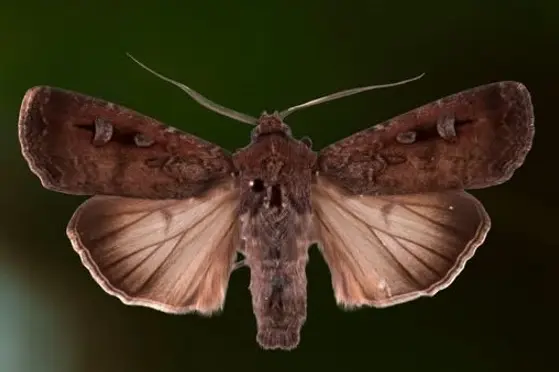
Murrumbidgee Landcare is urging people to give thousands of “little travellers” some space on their journey – they are Bogong Moths. People are seeing many endangered Bogong Moths on the move during spring. The moths are migrating from inland breeding grounds towards the Australian Alps, where they’ll shelter through the warmer months. They’re covering walls, gathering around lights and finding their way into homes. Long before scientists tracked their migration, Aboriginal people knew where the moths travelled, when they would arrive and where they gathered in the mountains, but the moths almost disappeared. Before 2017, billions of Bogong Moths made the migration each year, but following severe drought, their numbers decreased significantly and in 2021, the Bogong Moth was assessed as endangered. However, following years of dramatic declines, experts are calling this a story of hope, not a plague, as the moths are harmless and are simply passing through on their annual migration. Murrumbidgee Landcare says there is no need to panic, or to spray or kill them, but instead, witness a rare chance to watch a natural phenomenon that used to be far more common. You can help science by logging what you see by taking a photograph, noting your location and time and uploading it to Zoos Victoria’s Moth Tracker, which is part of a citizen science project tracking Bogong Moth migration. Sightings help researchers understand where the moths are thriving and how their recovery can be kept on track. What some people are calling a “moth plague” is actually the return of an ancient migration. Weighing less than a gram, Bogong Moths can migrate hundreds of kilometres and research has revealed they can navigate using the night sky and the Earth’s magnetic field. Along the journey, they feed on flowers and when they finally reach the mountains, they become an important food source for another threatened Australian animal, the mountain pygmy possum. The moths have been making their journey for thousands of generations, so enjoy just watching them pass through and continue on their way.